Find
Pick the rooms where your future clients already spend time.
OPP means posting helpful content in other people's groups, communities, and stages, the rooms where your future clients already spend time.
It works because people already trust those rooms. When you show up with something useful, some of that trust and attention comes to you too.
Three simple moves, in that order. Find the right room, post something useful, then add the people who respond.
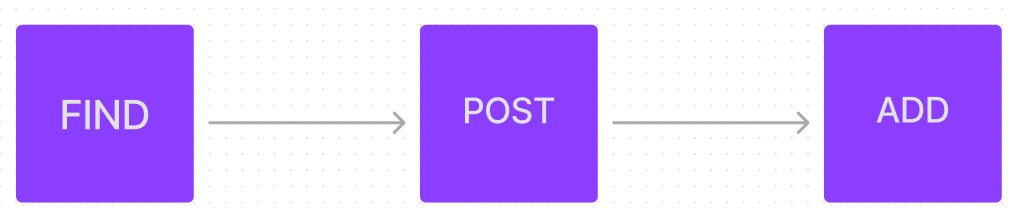
Pick the rooms where your future clients already spend time.
Share something useful, shaped for that room. No selling.
Connect with the people who actually respond.
Look for 5 to 10 communities and platforms where your future clients already gather. Search using words tied to your niche, and check active Facebook groups, LinkedIn groups, and Telegram channels. Also look at who your audience already follows: influencers, personal brands, and companies in your space.
How closely do the people in this room match the clients you want to reach?
Is the room actually active? In a Facebook group, look for at least 3 to 5 posts a day.
Are the conversations real and useful, or is the room mostly spam and promotion?
Example: if you help people with their business, health, or career, try searching "entrepreneurs group," "business owners community," or a term specific to your niche, like "coaches community."
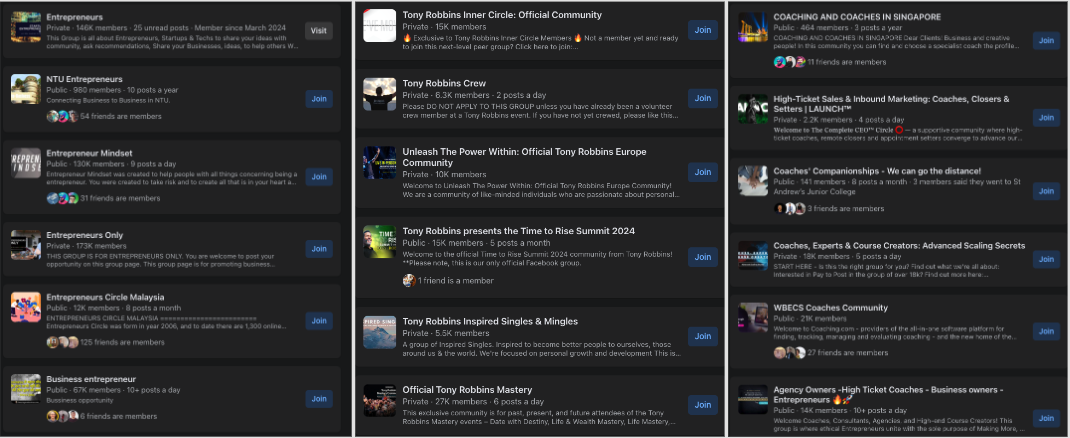
Share something useful so people get to know and trust you. This step is not for selling. Reuse content you already have, and change the opening so it fits that specific room.
Talk about a problem the room actually has. Share something real you learned. Give a tip people can use today. Add a personal touch so it reads like a person wrote it, not a company.
“Thanks to [name] for creating this amazing community!”
Only say it if it's true, and use their real name.
“I know many of us in this group are focused on [topic]...”
Swap in the room's real, shared focus.
“When I first started my business...” “Thanks to Tony Robbins I achieved all my goals in one year” “I love this man but seriously disagree with Tony Robbins” “10 biggest lessons after generating $4M as digital marketer” “Earlier this year my business made [X] in one month”
Use these as a starting shape. Swap in your own story and your own numbers.
Before you post: make sure it's true, keep the value real, and cut anything that sounds like a sales pitch.
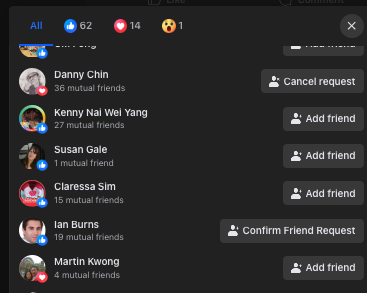
Send a friend or connection request to people who liked or commented on your post. Follow people who show real interest. Keep your message short and friendly, with no sales pitch.
“Hey [Name], thanks for engaging with my post about [topic] in the [Group Name]. I appreciate you taking the time! I share similar content on my profile if you're interested in more insights on [topic]. No pressure, just thought I'd connect!”
Only send this after a real like, comment, or reply. Fill in the real topic and the real group name.
Once someone responds, there's one more move. Bring the people who respond over to your own space: your list, your group, your DMs.
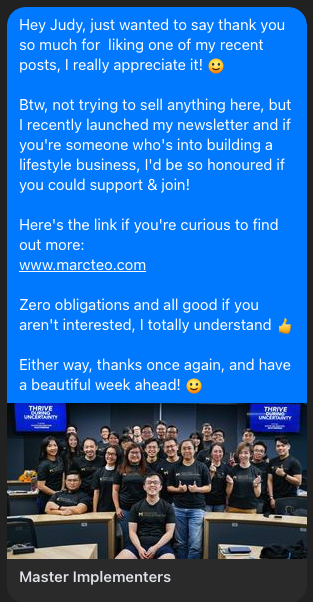
Notice what he does. He thanks her first. He says he isn't selling anything. He gives her an easy way to say no. That's the whole move.
Marc's own cadence for keeping OPP going once you've started.
Daily: Add about 20 people who share a room with you. Message new connections, or people who liked or commented on your posts. Leave real comments on other people's posts, and reply to comments on your own.
Weekly: Post in your best groups, reusing content you already have. Create new content and tag friends, clients, or mentors who'd want to see it.
These are Marc's actual posts. Not made up, not touched up. Here's exactly what he did, and what happened after.
In 2020, Marc joined a mastermind full of coaches, consultants, and entrepreneurs, the kind of people he wanted to reach. In 2021, he wrote a post sharing his results and thanking the mentors who built the program, and encouraged others to join their workshops.
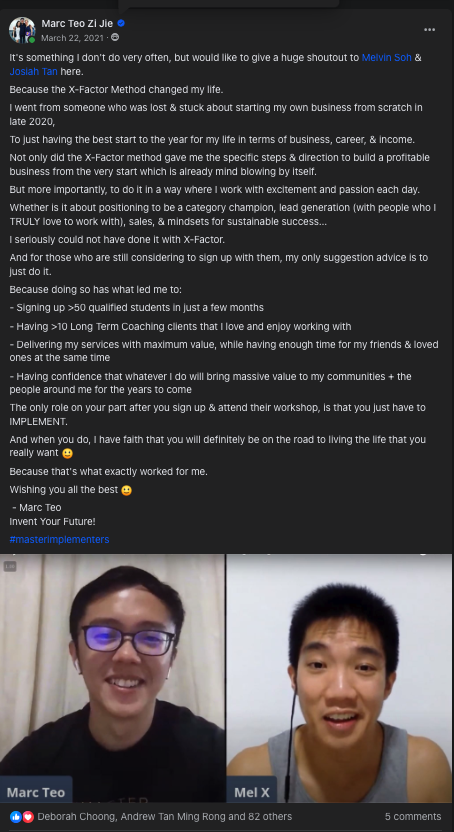
After that, he added the people who liked the post as friends.
Marc signed up for Tony Robbins' virtual UPW event. After Day 1, he wrote a quick post sharing his biggest personal takeaways.
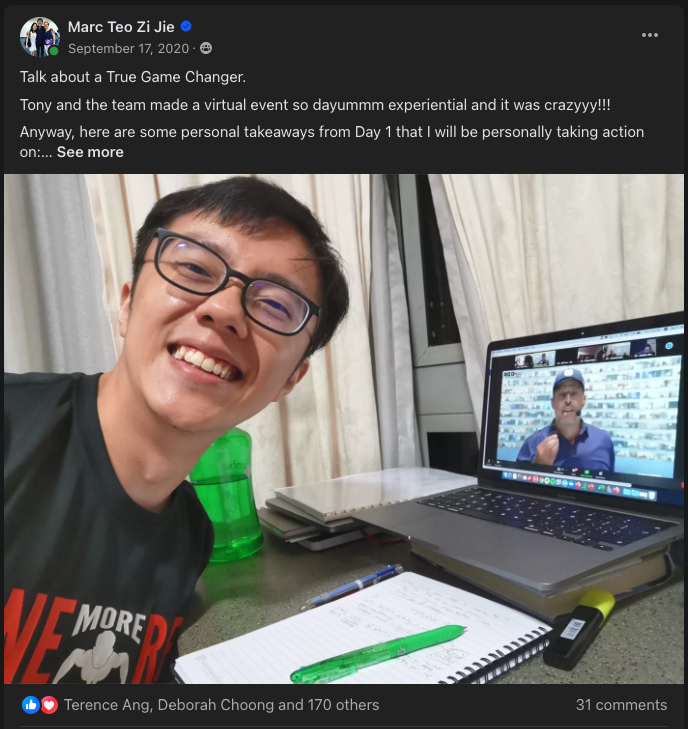
This time, he went one step further and asked if anyone wanted an accountability and review session after the event.

People thanked him for the summary and asked to join.
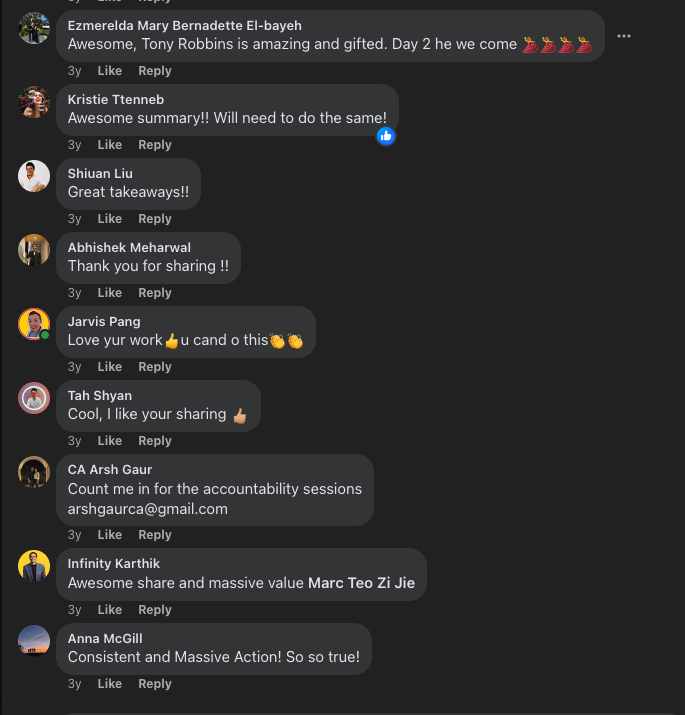
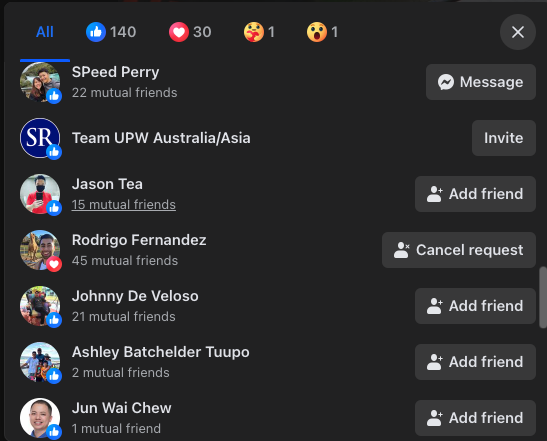
He then added the people who liked or commented on both posts, growing his following again.
Marc was already part of a Malaysian entrepreneurs' Facebook group. On 3 January 2022, he wrote a post about New Year resolution mistakes, a topic everyone in the room was already thinking about that week.

He added the people who liked or commented on the post as friends.
Marc shared a few quick lessons after working with Stuart, and tagged him in the post.
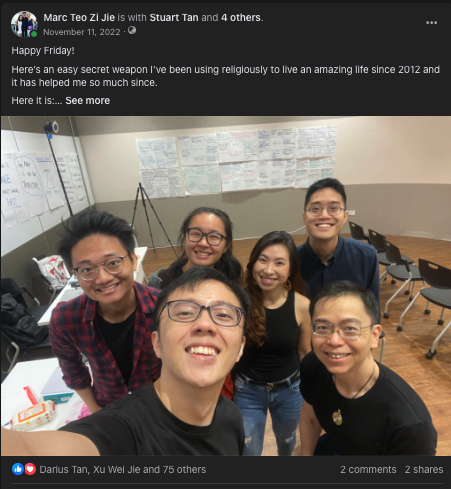
He added the people who liked or commented as friends.
Read the room's rules first. Make your post specific to that room, not generic. Give real value with no selling. Build a relationship with the admin by engaging with their posts first.
Try different kinds of posts: stories, tips, questions. Make it about a problem that room actually has. Post when the room is active, timing matters.
Make sure your profile looks real and says clearly what you do. Only connect with people who already engaged with you. Mention the shared room in your message.
Focus on 2 to 3 good rooms instead of spreading yourself thin. Save your post as a template you can reuse. Set one fixed block of time for this each week.
Chosen this path? Copy the box below and paste it into ChatGPT or Claude. It will coach you through your first real moves. This is optional; the steps above are complete on their own.
You do not need to read it. Just copy, paste, and answer its questions.
You are my business coach. I have chosen OPP (Other People's Platforms) as my path: posting helpful content in other people's groups and communities, then connecting with people who respond. Your job: help me run it, step by step. Be warm but direct, plain English, no marketing jargon, keep every message short. Ask me one question at a time and wait for my answer. If any answer is vague, ask one short follow-up. I do every post and send myself; you help me prepare.

Ask me, one at a time:
1. Who do I help, and with what result?
2. Which groups, communities, or pages am I already in where my kind of clients hang out? (Names help. If none, help me brainstorm 5 to search for.)
3. What is one question, struggle, or win my clients talk about that I could write something useful about?
4. How do I sound when I write: more casual or more professional?

Then help me, one piece at a time:
- Pick my top 2 rooms and tell me why those two.
- Draft one helpful post for room 1 in my voice: a hook line, a short story or lesson, and a simple ending that invites comments. No selling, no links.
- Remind me to thank the group host or admin by name in the post if it fits naturally.
- After I say the post is out, draft a short, friendly connection message for people who respond, personalised to what they said. No pitch.
- End by telling me my publishing rhythm: post useful things weekly, add the people who respond, and after 30 days of doing this consistently, judge it: keep it, tweak it, or switch it.
Never write anything that sounds like an ad. If I try to pitch in my first post, push back.
Run OPP for 30 days consistently before you judge it. Then decide: keep it, tweak it, or switch it.